
Lake Havasu City Neighbor Record Layers
The immediate block around one Lake Havasu City address appears in several public layers. The Mohave County map shows parcel shapes and which lots adjoin. The Assessor gives assessed owner, situs, mailing address, and parcel number. City community pages identify public boards or specialized contacts, but they do not list each household. Arizona voter access is controlled by statute. Historical directories may add older listed occupants only after a specific local volume is verified.
| Block source | What it can show nearby | How Lake Havasu access works |
|---|---|---|
| Mohave Public Map Viewer | Parcel polygons, streets, aerials, zoning, and adjoining lots | Free viewer with identify, selection, print, and export tools |
| Mohave Assessor roll | Assessed owner, parcel number, situs, and mailing address | Free public parcel search; not proof of occupancy or title |
| Voter information | A person's own status and districts; restricted bulk fields for authorized purposes | No public name, street, or block browser |
| City community records | Boards, public meetings, vacation-rental contacts, and requested city records | Public pages or focused records requests; no city HOA roster |
| Historical directories | A listed subscriber or household in a verified edition | Library or archive research; exact Lake Havasu runs remain unverified |
These layers answer different questions. An Assessor name is the person or entity assessed for a parcel, not every resident behind that door. A mailing address may be a post-office box or a place outside Lake Havasu City. A vacation-rental emergency contact is a special city contact, not necessarily the owner or guest. Keep each label attached to its source.
Map Lake Havasu City Neighbors by Parcel
The Mohave County Public Map Viewer is the sound starting point for an immediate-block lookup. Search or pan to the known Lake Havasu City address, identify its parcel, and keep the parcel layer visible. Then click the polygons that physically touch it. The Identify Multi-Tool and selection controls can collect several features, and selected parcel data may be exported in CSV, XLSX, or Shapefile form with a 2,000-result cap.
- Find the subject address and confirm its parcel outline rather than relying on the pin alone.
- Select each polygon that touches the subject lot. Include a parcel across the street only when it fits the intended block area.
- Save each APN, the assessor parcel number, and open the linked Mohave Assessor record.
- Compare situs and mailing addresses. Note an owner name as assessed ownership, never as a full household claim.
- Return to the map when a split, wash, right-of-way, or large vacant parcel changes which lots are truly adjacent.
GIS is a reference system, not a survey or title opinion. Parcel changes can lag, and the county warns that its layers are not for engineering or legal boundary work. For a whole named road rather than the tight block, shift to the Lake Havasu City by-street records method.
- Parcel
- A mapped unit of land identified for assessment.
- APN
- The assessor parcel number that links the map, Assessor, permits, and many deed clues.
- Situs address
- The physical address of the parcel, which can differ from the owner's mailing address.
Blocks Follow the Wash Terrain
Consecutive house numbers can mislead on a Lake Havasu City block. The planned community grew across rolling, wash-cut ground rather than a simple rectangular grid. Curving streets, drainage washes, vacant land, rear lot lines, and long polygons can place the numerically next address far from the subject lot. A parcel that appears close on a street list may not touch at all.
This local geography makes polygon adjacency more reliable than counting up and down a road. Aerial and street layers provide context, while the parcel layer fixes the selection to the mapped lot. The same caution applies to the north and south suffixes used on routes such as McCulloch Boulevard, Palo Verde Boulevard, and Lake Havasu Avenue. Use the official indexed street name, not informal “Main Street” or “McCulloch Mile” branding.
Terrain tip. Select the Lake Havasu City parcel polygons that touch; do not infer nearby households from the next street numbers.
Voter Files Are Not Block Rosters
The Arizona Voter Information Portal is authenticated self-service. A voter enters Mohave County, last name, birth date, an identification method, and the matching identification number. Address mode identifies voting-place and district information. It does not reveal the names of nearby Lake Havasu City residents. The captured portal screen shows that personal verification gate:
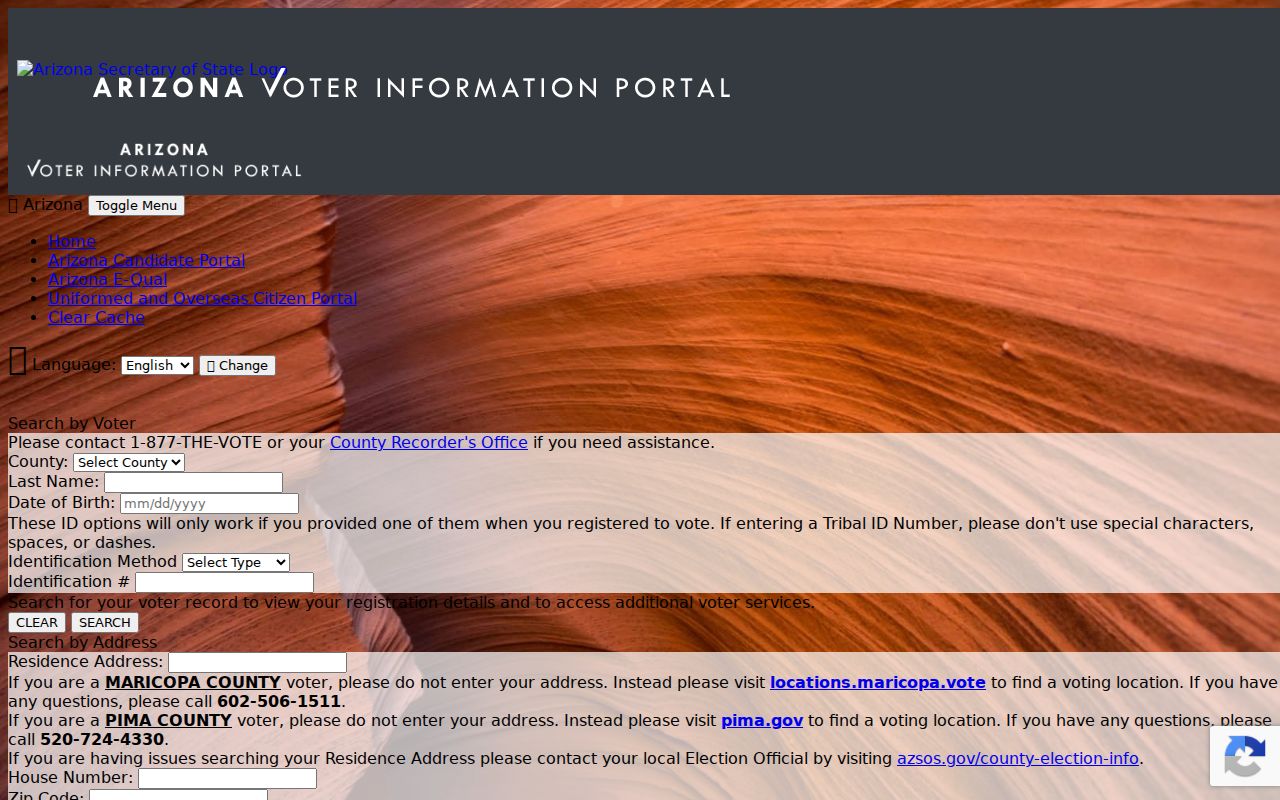
The screen supports a clear boundary: the portal helps one voter check their own record or an address's polling information, not browse a block. A match can provide registration status, districts, notices, ballot-by-mail status, and participation history. Participation never reveals a selected candidate or measure.
Mohave County also accepts a written voter-data request, but A.R.S. § 16-168 restricts it to listed lawful purposes and prohibits commercial use and internet posting or distribution. Requests require identity, scope, format, an authorized-purpose statement, certifications, signature, and advance payment. The county restriction page appears below:
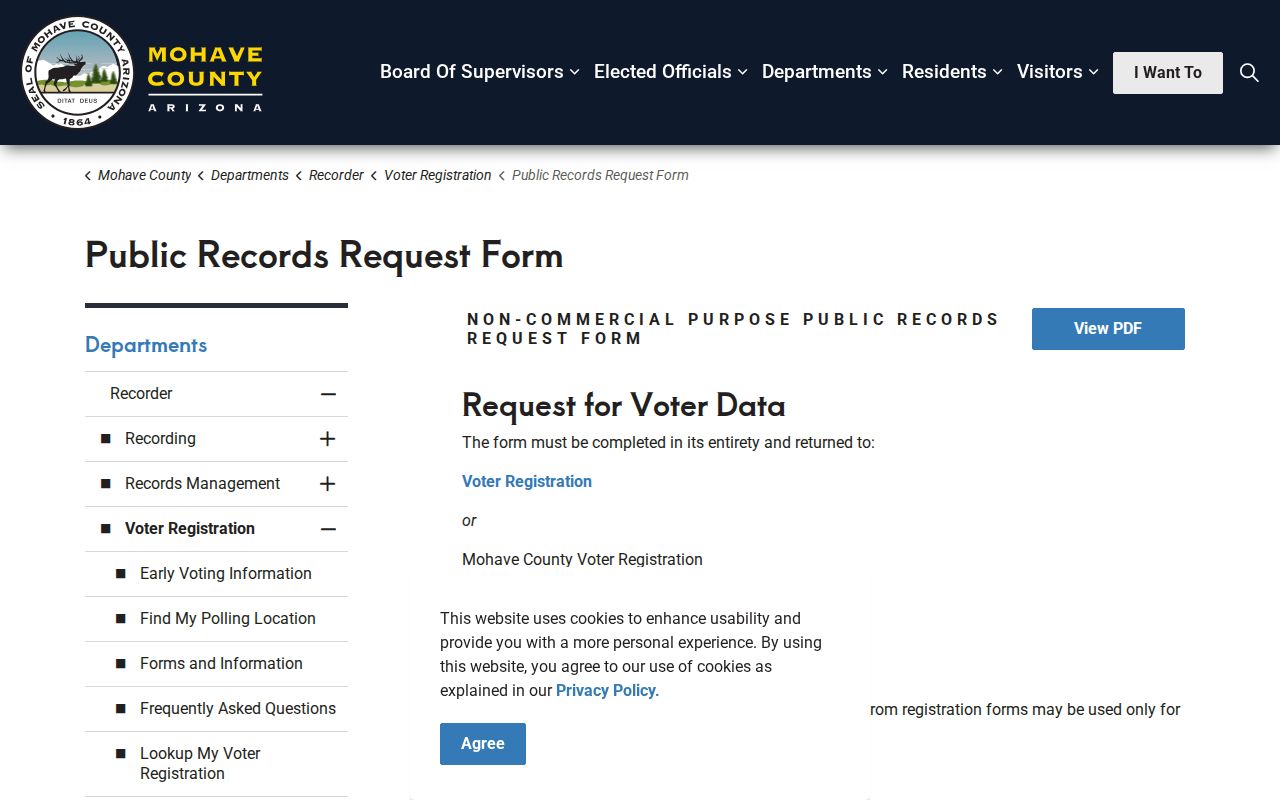
The image is not an invitation to build a neighborhood list. It shows why the address-bearing voter file remains a controlled record. Protected voters are excluded, and violating the statutory use and distribution terms can be a Class 6 felony.
Community Contacts, Not Household Lists
No verified city-run neighborhood-association umbrella or public HOA member directory was found for Lake Havasu City. Private HOAs exist, but the city does not enforce them and does not publish their household rosters. Public community sources work better as contact or participation channels. They can identify a meeting, office, or responsible contact without exposing private membership.
Boards and Commissions
The city board page publishes civic names and meetings. It is a civic record, not a block directory.
Vacation Rentals
The city vacation-rental resource provides a narrow address-keyed emergency-contact layer. The contact may not be the owner or occupant.
Neighborhood Watch
Lake Havasu Police coordinates participation at (928) 855-1171. The program is a safety contact, not a public roster.
Adopt-a-Street
Agreements may be city records, but no current searchable participant list was verified. Request a specific existing record when needed.
Direct introductions, posted meetings, and official contact points reveal more about community life than a guessed household list. They also keep the inquiry tied to Lake Havasu City civic participation instead of private personal data.
Library Research for the Block
The Mohave County Library Lake Havasu City branch provides computers, scanning, Wi-Fi, and research help at 1770 N McCulloch Boulevard. Its public pages do not establish a named run of local reverse directories or a neighborhood roster, so call before relying on a particular volume. The branch page is shown here:
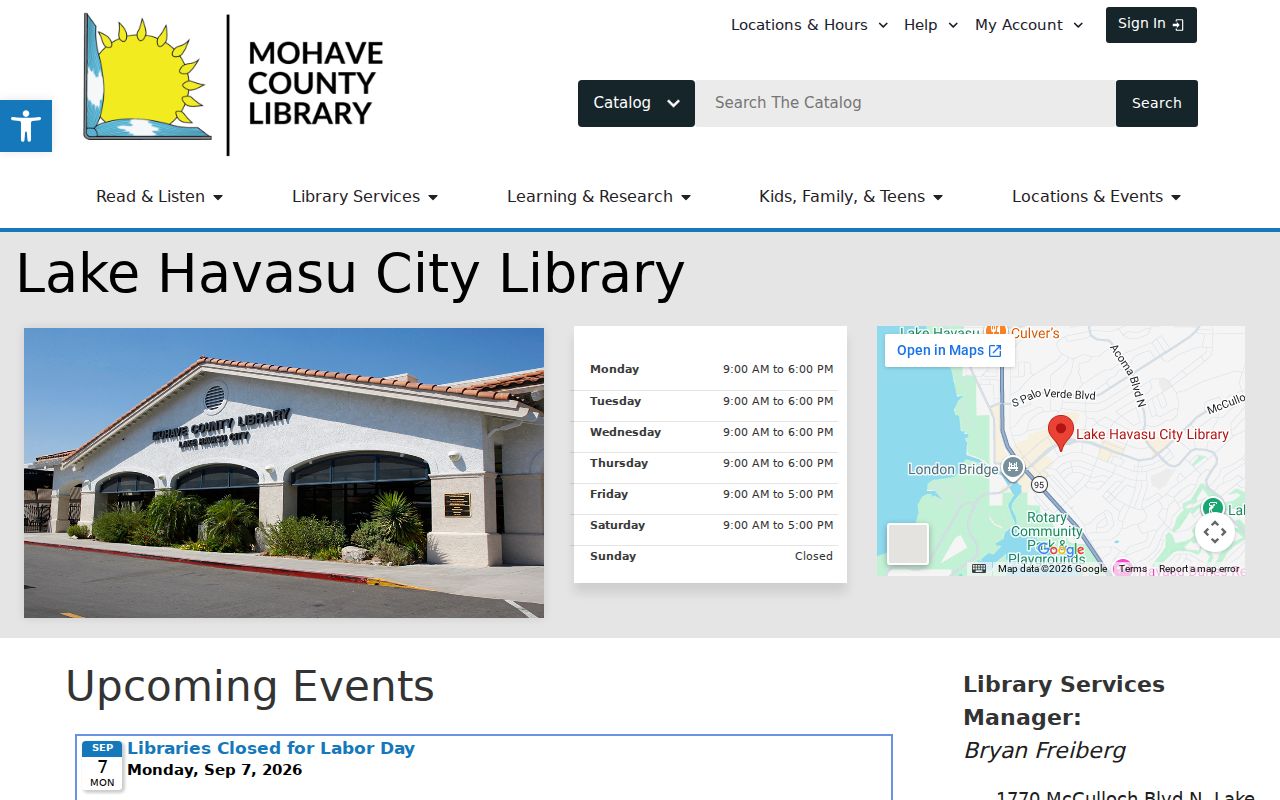
The library is useful as a research and community access point, not as proof of who now lives on a block. Staff can help check catalogs and broader genealogy resources. Any reverse or telephone directory must be inspected for its exact title, year, coverage, and street section before an entry is tied to a past Lake Havasu City household.
Note: Verify a directory edition and its date before treating an address entry as evidence of a past neighbor.
Lake Havasu City Neighbor History Contacts
Community history can explain who organized a Lake Havasu City area without turning private membership into a public directory. The Lake Havasu Museum accepts collection questions, and the Lake Havasu Genealogical Society offers research help and obituary lookup. Their public contacts are legitimate starting points for family and local-history questions. Neither organization was shown to publish its member list.
The Arizona Memory Project adds maps, photographs, government publications, and oral histories. Such sources can identify a public official, early business, street context, or past community event, but they do not establish who lives next door now. Treat each historic name as tied to its source date. Then use current parcel records only for the limited ownership facts they state.
Not Every Lake Havasu City Lookup
Some official name tools are useful to individuals but say nothing reliable about a block. The Arizona Department of Revenue unclaimed-property search helps a person look for property held by the state and begin a documented claim. Its captured landing page appears below:
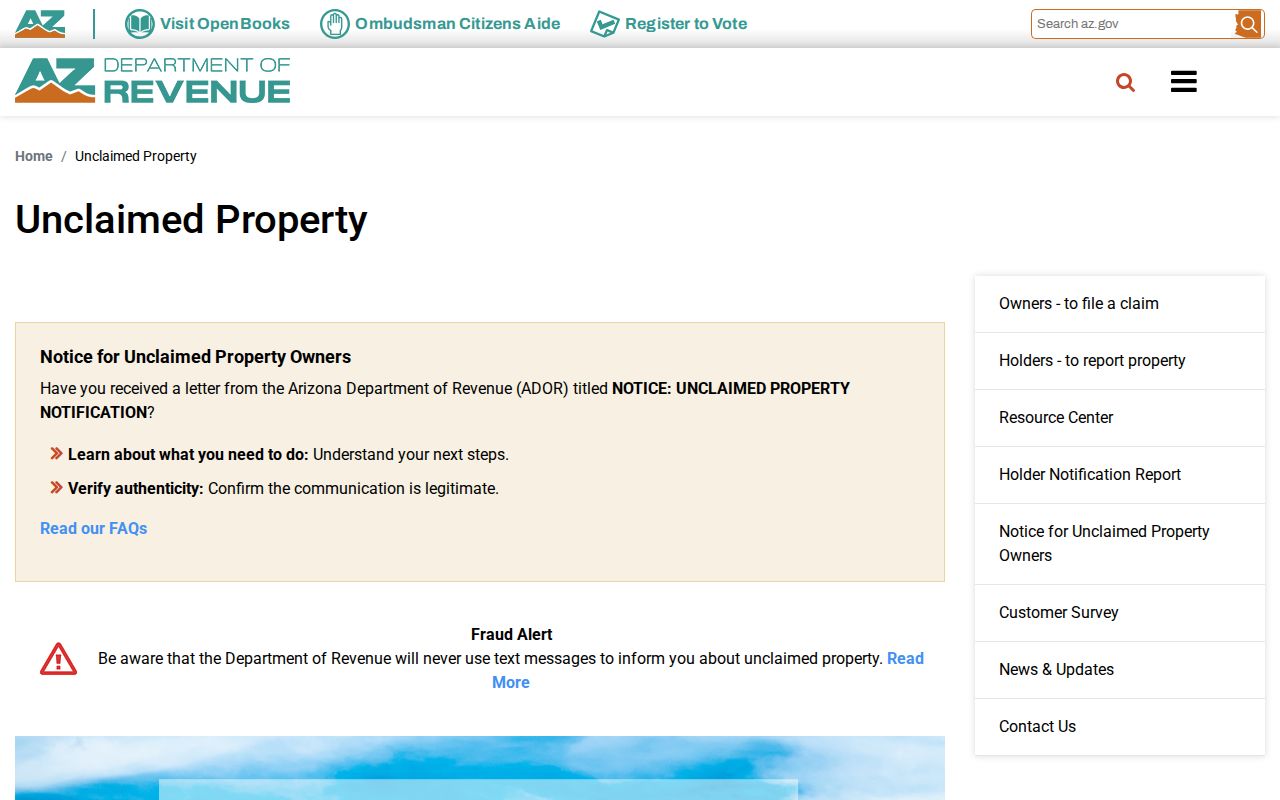
The official search should be used by a person checking their own possible property or helping with a lawful estate matter. A name or old mailing clue there does not establish that someone is a present Lake Havasu City neighbor. Keep it outside the block map and verify any claim through the state process.
| Source type | Strength | Neighbor-lookup limit |
|---|---|---|
| Official parcel and assessor rolls | Current mapped parcel and assessed-owner facts | Do not identify all occupants |
| Official civic contacts | Named public roles, meetings, and specialized contacts | Do not supply private member households |
| Commercial neighbor compilations | May combine parcel, directory, and marketing data | Can be stale, merged, or wrong and cannot prove household makeup |
Lake Havasu City Neighbor Privacy Limits
A responsible block search has firm stopping points. Assessor and GIS records leave out renters, children, roommates, visitors, and many other people at an address. Utility-customer and motor-vehicle personal data are not public block directories. Voter records exclude protected addresses and are subject to strict use limits. A commercial opt-out can reduce one company's display, but it does not remove a source record held by Mohave County or Arizona.
Arizona's Address Confidentiality Program provides a substitute address and mail forwarding for eligible protected participants. Government offices generally accept the substitute under A.R.S. § 41-166. Mohave County property records have a separate protection path under A.R.S. § 11-483. Those protections are reasons to stop, not gaps to defeat.
Lawful use. Research the Lake Havasu City block for courteous community contact and personal safety awareness, never to watch, harass, threaten, or expose a protected person.